188 High St,
Cranbourne 3977

Think Your Dog Is Limping? Here’s What Vets Assess During a Lameness Work-Up

Understanding Dog Lameness

At Casey & Cranbourne Veterinary Hospital, we often see dogs that are limping, slowing down, or not moving as usual. Sometimes, the signs are clear, such as refusing to put weight on a leg. Other times, they are subtle, like being slow to rise, hesitant to jump into the car, or sitting differently.

Many owners may not realise that a thorough lameness work-up involves much more than identifying which leg seems sore. When assessing a lame dog, our vets consider the entire patient. Movement, posture, muscle development, spinal flexibility, and behaviour all provide valuable information. Even before the physical exam, we observe how the dog moves and interacts with their environment.

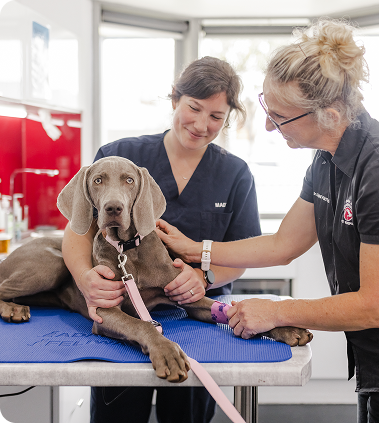
Our vet, Dr Lizzy, recently demonstrated this process with Cash, a greyhound presenting with front leg lameness. A structured lameness examination shows how much information can be gathered through careful observation and thorough assessment.

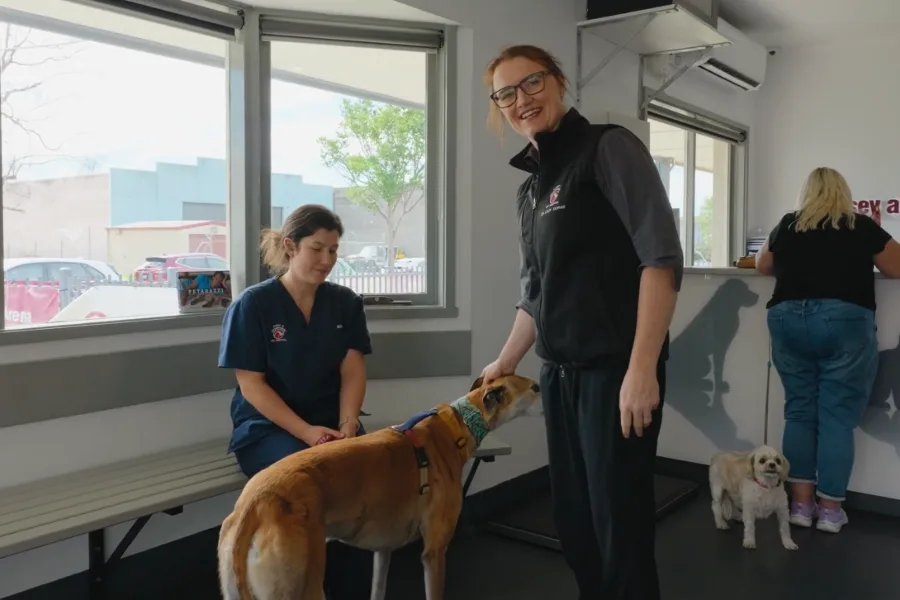
Casey & Cranbourne Vet assesses greyhound with lameness concerns in veterinary hospital reception setting

Why Observation Starts Before The Exam

Assessment often begins in the waiting room. Before examining the patient, we observe how they stand, sit, and move. A dog may reveal discomfort through small changes before they are formally handled, especially if they are trying to avoid pressure on a sore area. These early observations help guide the physical examination and show us where to look more closely. Signs such as shifting weight, reluctance to rise, or guarded posture can provide valuable clues, especially in dogs with chronic mobility issues.

Watching How A Dog Moves

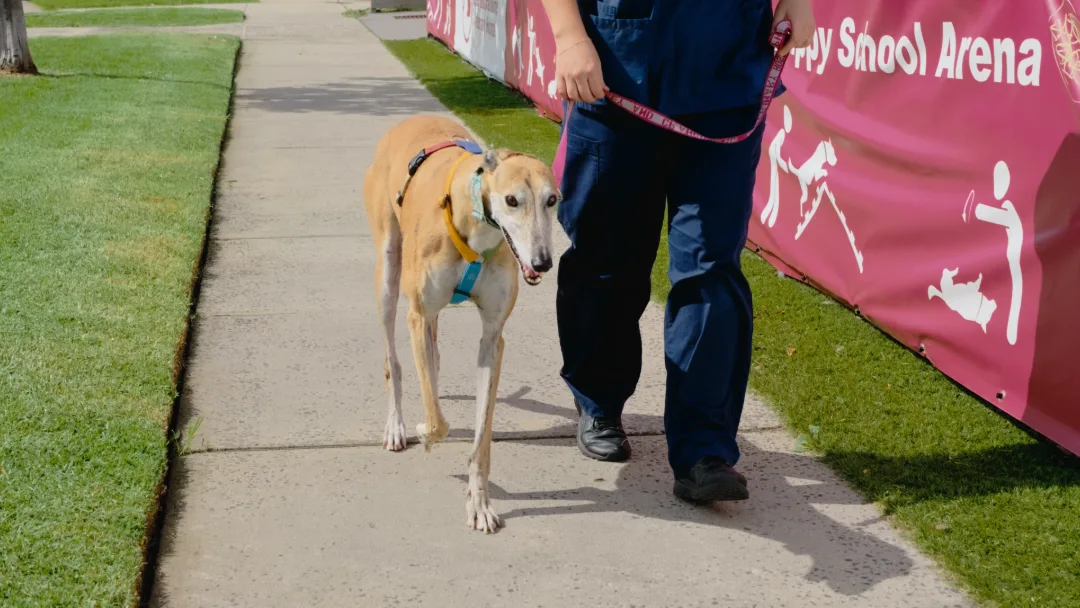
Next, we conduct gait analysis. Depending on the dog’s comfort, we observe them walking and trotting outside the consult room to assess stride length, posture, and weight distribution. In Cash’s case, his left front leg lameness was more noticeable during movement. Dr Lizzy demonstrated the “head bob” seen in dogs with front leg pain, where they lift their head slightly when placing weight on the sore limb to reduce pressure and shift weight to the stronger side.

These movement patterns can be difficult for owners to notice at home, especially in smaller dogs or those with subtle lameness. This highlights the importance of a structured assessment by an experienced veterinary team.

We also observe factors owners may not immediately associate with lameness, such as muscle asymmetry, changes in posture, pelvic movement, and tail position. Some dogs show signs of long-term compensation, with other body parts carrying extra strain.

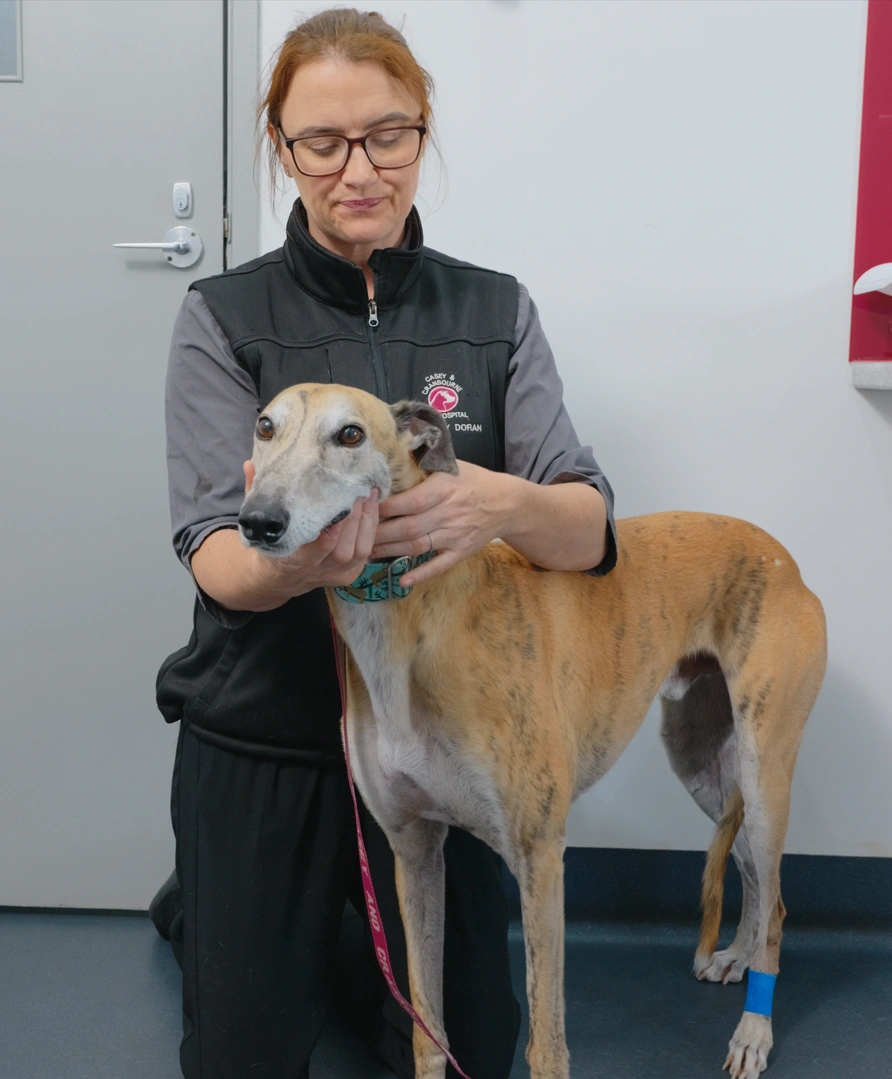
Casey & Cranbourne Vet examines greyhound's neck and head to assess lameness and mobility issues.

Examining The Whole Body, Not Just One Leg

Once inside the consultation room, the physical examination becomes more detailed. Even when one leg appears obviously painful, we still examine all four limbs carefully. Dogs are very good at compensating, and pain in one area can place additional stress on other areas.

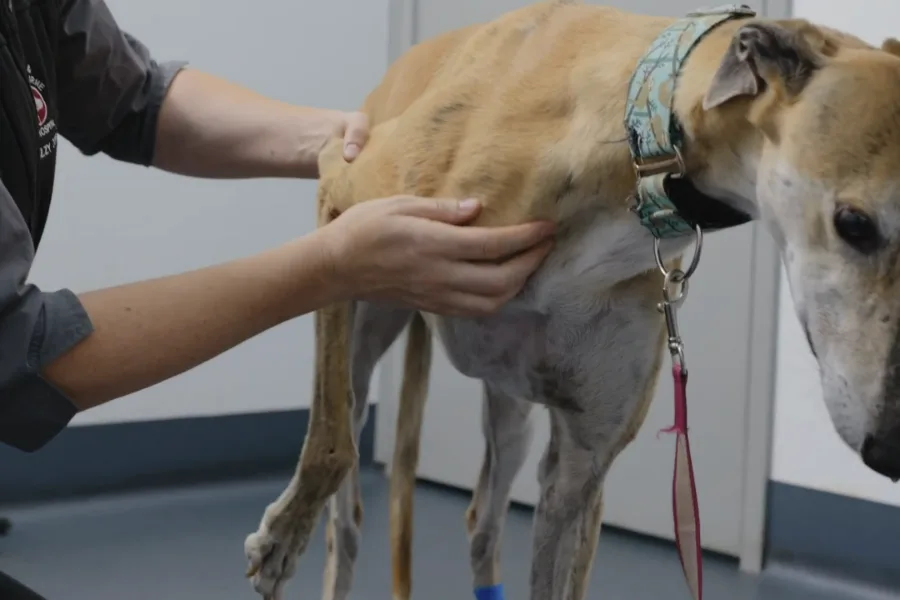
During Cash’s examination, Dr Lizzy systematically assessed each joint and muscle group for swelling, heat, pain, reduced flexibility, and changes in range of motion. She examined the shoulder, elbow, carpus, digits, and nails individually.

A lameness work-up also includes the neck and spine, as spinal discomfort can affect movement and weight-bearing. In older dogs, especially, stiffness or arthritis in these areas can reduce mobility and alter gait.

As part of Cash’s examination, Dr Lizzy assessed the flexibility and range of motion of his neck and spine, evaluating flexion, extension, and rotation. She also palpated the back and pelvis for tension, pain, or asymmetry. These details are important because not every limp is due to a simple limb injury. Discomfort may stem from the spine, chronic arthritis, or gradual muscular compensation.

Determining whether the issue is acute or chronic is also important. Dogs that are slow to stand, cautious when lying down, or stiff after rest may have a longstanding problem rather than a recent injury. Observing how a dog rises, sits, and transitions between positions provides useful information alongside the orthopaedic examination.

closeup of Casey & Cranbourne vet examines joint flexibility on greyhound in hospital assessment room.

When Further Diagnostics May Be Needed

If needed, we may recommend further diagnostics. Depending on the findings, this can include radiographs or a more detailed orthopaedic assessment to better understand the cause of lameness. Many owners find it helpful to see how much information can be gathered before any advanced testing even begins. Careful observation and a methodical physical assessment are essential for diagnosing mobility concerns in dogs.

​Why Limping Should Not Be Ignored

Most importantly, limping should not be dismissed as “slowing down with age.” Changes in movement, posture, or willingness to exercise often indicate discomfort. In Cash’s case, the examination showed that a thorough approach helps us identify the source of discomfort and determine the next steps. This thoughtful care allows us to make informed decisions for each patient.

In this video, Dr Lizzy demonstrates the lameness work-up process with Cash.

Book your pet’s appointment
today with our experienced, caring team.

Quick Answers to Common Questions

What does a vet look for during a dog's lameness examination?

A dog’s lameness examination begins with observation before the physical assessment even starts. Vets assess posture, gait, stride length, muscle symmetry, weight-bearing and how the dog moves through different environments. They also examine the neck, spine and all four limbs to identify areas of pain, stiffness or reduced range of motion.

Why do vets watch dogs walk and trot during a lameness work-up?

Watching a dog walk and trot allows vets to assess how weight is distributed through the body during movement. Changes in stride length, pelvic movement, head position or reluctance to bear weight can help identify subtle signs of lameness that may not be obvious while standing still. In Cash’s case, gait analysis highlighted left front leg lameness.

What is a head bob in dogs with lameness?

A head bob is a movement pattern sometimes seen in dogs with front leg lameness. Dogs will often lift their head slightly when placing weight on the sore leg to reduce pressure through that limb, while lowering the head more normally over the stronger leg. It can be one of several clues vets use during gait assessment.

Can neck or back pain cause lameness in dogs?

Yes, neck and spinal discomfort can contribute to changes in movement and weight-bearing. During a lameness examination, vets assess the neck, back and pelvic region because pain or stiffness in these areas can affect how a dog walks and carries themselves. Reduced flexibility or discomfort during movement may help guide further investigation.

Why do vets examine every limb if only one leg looks sore?

Dogs can compensate for pain in one area by shifting weight through other parts of the body. Examining every limb helps identify secondary strain, muscle asymmetry or additional sources of discomfort that may not be immediately obvious. A full physical examination also reduces the risk of focusing too narrowly on a single area too early.

What happens after a dog's lameness assessment?

The examination findings help determine whether further diagnostics are needed. Depending on what is identified during the work-up, this may include radiographs or additional orthopaedic testing to better assess joints, muscles or the spine. The goal is to understand the source of discomfort and improve the dog’s mobility and overall well-being.