
The Story of Coby:
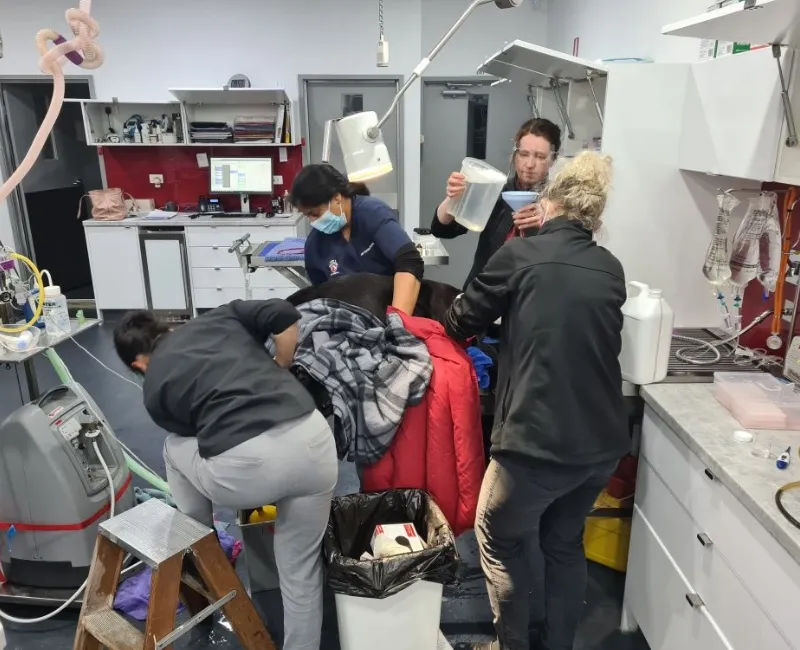
When Minutes Matter: Emergency Treatment for Snail Bait Poisoning
Coby is a 6.5-year-old Labrador – the kind of dog who lives life nose-first, tail wagging, and always curious about what’s going on around him. One evening, his owners came home to find something unsettling: a packet of snail bait torn open on the garage floor.
They did the right thing immediately. Even though neither Coby nor his companion dog Chokka was showing obvious symptoms yet, they rushed both dogs straight to Casey & Cranbourne Veterinary Hospital – arriving just as the clinic was closing.
That timing mattered more than they could have known.
Poisoning in Dogs: Sorting the Risk Before Symptoms Take Hold
Snail bait poisoning can escalate quickly, but early signs aren’t always obvious. At first, both dogs appeared relatively normal. To work out which dog had eaten the bait, both were given medication to induce vomiting safely.
Chokka vomited and showed no signs of toxin ingestion.
Coby didn’t.
Instead, subtle changes began to appear, such as excessive drooling, panting, and small muscle tremors. These are early warning signs that metaldehyde (the active ingredient in many snail baits) has already started affecting the nervous system.
At that point, the decision was clear: treat immediately.
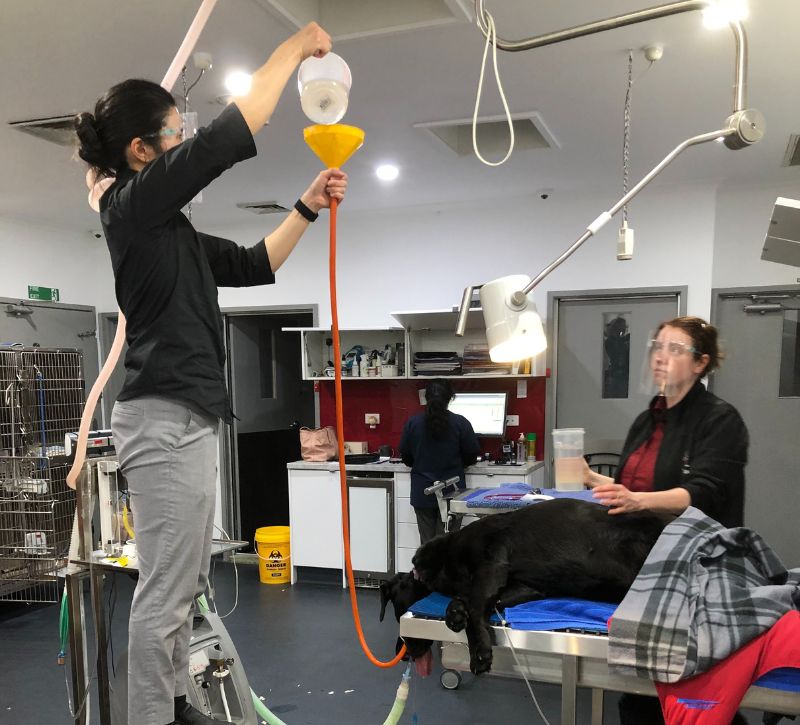
Emergency Treatment, After Hours, as a Team
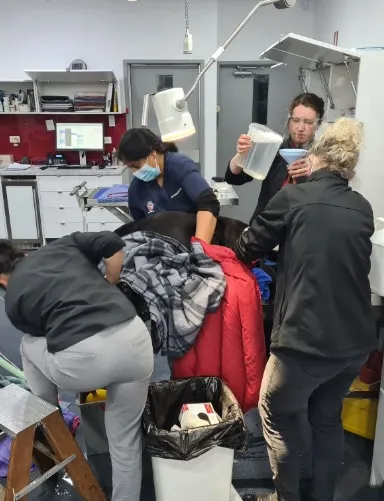
Coby was placed under general anaesthetic so the team could act quickly and thoroughly. While one group focused on flushing his stomach to remove any remaining toxins, another worked simultaneously to clear his lower bowel. Green snail bait pellets were recovered, confirming the source and validating the urgency of the response.
Activated charcoal was then given to help bind any remaining toxins and reduce further absorption.
This wasn’t a single-vet effort. Three veterinarians and two nurses stayed back long after closing time, working together for close to three hours with one shared goal: give Coby the best possible chance.
He recovered smoothly from the anaesthetic and was transferred to an emergency centre overnight for monitoring.
What We Can Learn from Coby's Story
Snail bait poisoning doesn’t always announce itself with obvious symptoms right away – and that’s what makes it so dangerous.
Coby’s owners didn’t wait to see if he was sick. They saw a torn packet and acted immediately, even though both dogs appeared normal. That quick thinking, combined with our team’s ability to respond after hours, gave Coby the outcome he needed.
This story highlights an important reality: common household and garden products – things we use without thinking – can be life-threatening to our pets. Snail bait is often stored in garages or sheds where curious dogs can access it, especially if the packaging isn’t secure or gets knocked over by wind or movement.
If you use snail bait, pest control products, or other garden chemicals at home, take simple precautions: store products securely out of reach, clean up spills immediately, and keep pets away from treated areas until it’s safe. Even ‘pet-friendly’ products should be stored carefully.
Dogs are naturally curious and often investigate with their mouths. If you suspect your dog has eaten something toxic – even if they seem fine – don’t wait for symptoms to develop. Snail bait poisoning can escalate quickly, and early treatment makes all the difference.
Outcome: Back Home, Back to Himself
Coby didn’t require further treatment overnight and was able to go home the next day. He had no ongoing tremors, no seizures, and no lasting effects noticed by his family.
His owners later shared how grateful they were – not just for the medical care, but for the fact that the entire team stayed, worked together, and didn’t hesitate when time was tight.
If You're Worried About Poisoning, Don't Wait
If your dog may have eaten something toxic (even if they seem okay), call a vet immediately. Early treatment can make the difference between a full recovery and a life-threatening emergency.
Our team at Casey & Cranbourne Veterinary Hospital is here to help when it matters most.
Our Services
Trusted Veterinary Services All Under One Roof
Your pet’s care is supported by a highly experienced team who provide everything from routine check ups and preventative care, to advanced diagnostics, surgery and dentistry. We take a careful, thorough approach to every case and keep you informed at each step, so your pet receives reliable, compassionate care throughout their life.
Whether your pet needs everyday health support, or help with a more complex condition, our team work together to provide clear answers and thoughtful treatment in a calm, modern hospital.


PET EDUCATION AND RESOURCES
Practical advice and real case stories to support your pet’s care.
Pet Care Articles
Helpful tips and expert guidance to support your pet’s health and everyday well-being.
Real Life Case Studies
Real stories from our veterinary team showing how we diagnose, treat and support pets through illness and recovery.


Quick Answers to Common Questions
What foods are toxic to dogs?
Common toxic foods include chocolate, grapes and raisins, xylitol (found in sugar-free products), onions, garlic, and macadamia nuts. If you’re unsure, it’s always safest to check with a vet.
What household chemicals are dangerous for pets?
Snail bait, rat poison, antifreeze, cleaning products, some garden chemicals, and car fluids can all be extremely dangerous if ingested by dogs or cats.
What symptoms suggest my dog has been poisoned?
Signs can include drooling, vomiting, tremors, seizures, weakness, collapse, difficulty breathing, or sudden behavioural changes. Some toxins cause delayed symptoms, so absence of signs doesn’t mean your pet is safe.
What should I do if my dog eats snail bait?
Seek veterinary care immediately. Do not wait for symptoms and do not try home remedies. Bring the packaging with you if possible.
I'm in Cranbourne / Clyde / Botanic Ridge - can you help in an emergency?
Yes. We regularly see emergency cases from Cranbourne, Clyde, Cranbourne West, Botanic Ridge, Devon Meadows and surrounding suburbs.
What symptoms suggest my dog has been poisoned?
Signs of poisoning can include drooling, vomiting, tremors, seizures, weakness, collapse, difficulty breathing, or sudden behavioural changes. Some toxins cause delayed symptoms, so a dog may appear normal at first even after exposure.
Book your pet’s appointment
today with our experienced, caring team.

Newsletter sign up
Contact Info
Opening Hours
Monday to Friday: 8:00am –
7:00pm
Saturday: 8:00am – 3:00pm
Sunday: CLOSED
Closed on public holidays
For all out-of-hours emergencies,
please contact Veterinary Referral Hospital (VRH) on 1300 385 874
or Casey Pet Emergency on (03) 8790 1625.