
Patient Overview
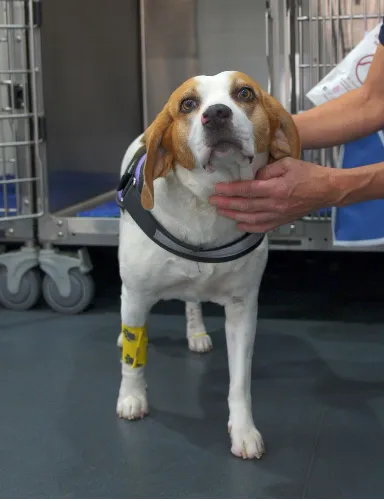
Daisy is a 5-year-old female Beagle who suddenly seemed out of sorts at home. Her owner, Rebecca, saw that Daisy wasn’t eating much, seemed tired, and had a sudden bout of watery diarrhoea. Rebecca knew something wasn’t right and wasted no time getting Daisy checked out.
Because Daisy hadn’t been desexed, she faced certain health risks. Pyometra, a dangerous infection of the uterus, was at the top of the list. It can turn life-threatening fast, so quick action is key.
Initial Presentation And Clinical Findings
On examination, Daisy showed a painful and tight abdomen, raising immediate concern for an internal issue.
Seeing how unwell Daisy was, we got to work straight away. We ran tests that same evening to get answers as quickly as possible and keep her safe.
Diagnostic Process
We used a mix of in-house blood tests, X-rays, and ultrasound to get a clear picture of what was happening with Daisy.
Blood tests revealed a low white blood cell count, indicating a severe infection. There was also elevated blood glucose, consistent with stress. Additionally, Daisy had low potassium levels, likely due to fluid and electrolyte losses from diarrhoea.
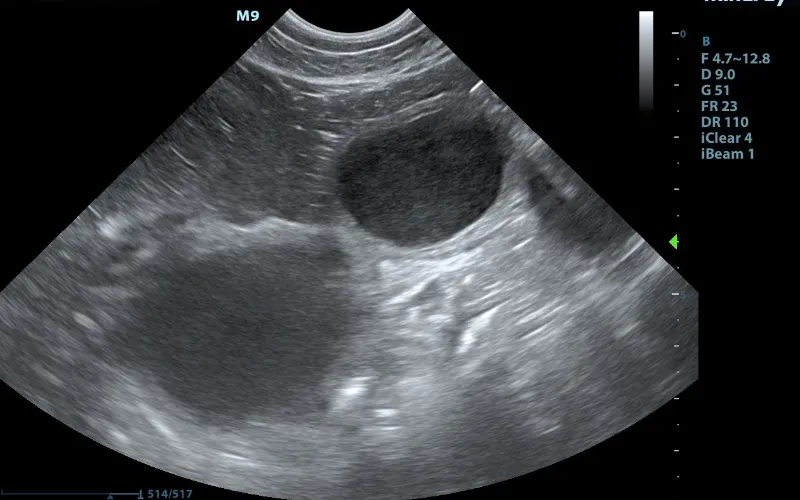
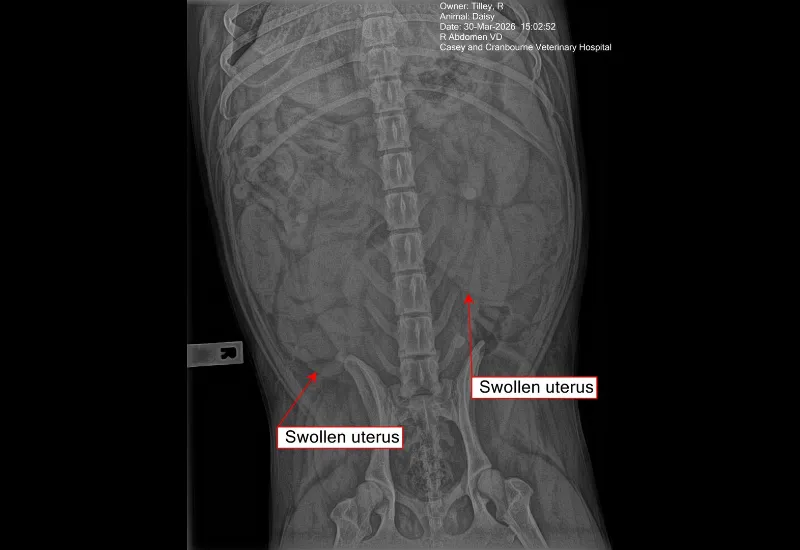
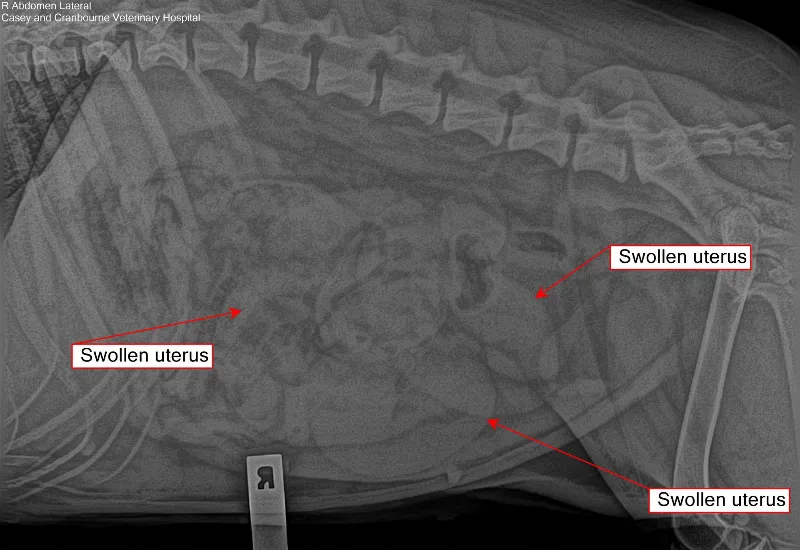
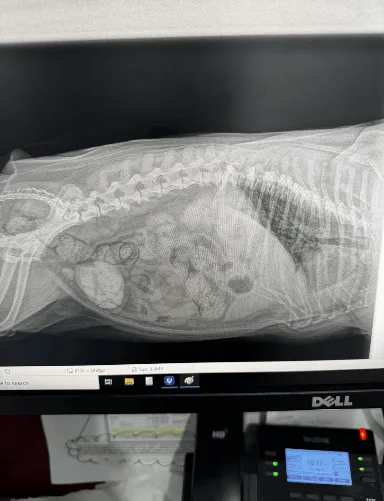
X-rays made it clear her uterus was enlarged, and the ultrasound confirmed it was filled with fluid, classic signs of pyometra.
This combination of findings enabled the team to quickly reach a clear diagnosis and plan the next steps without delay.
“Prompt diagnostics allowed us to confirm pyometra and move quickly to surgery before Daisy’s condition worsened.”
Dr Yuen Jia Lim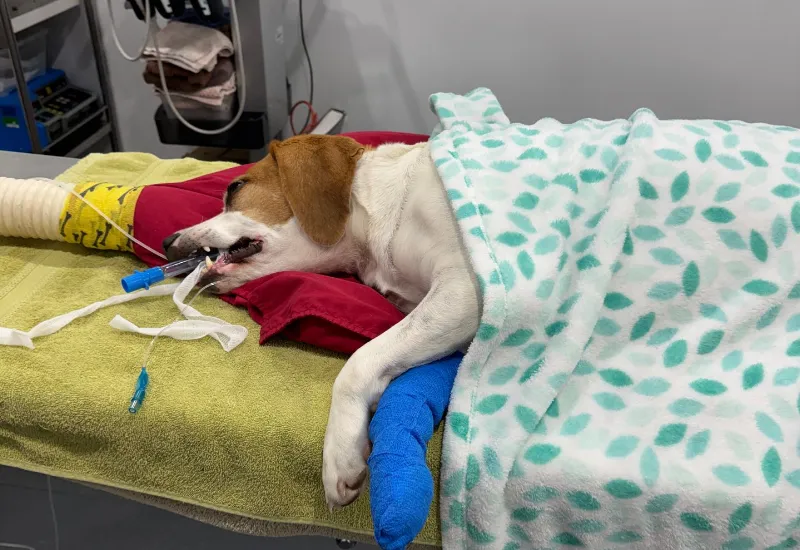
Coordinated Team Approach
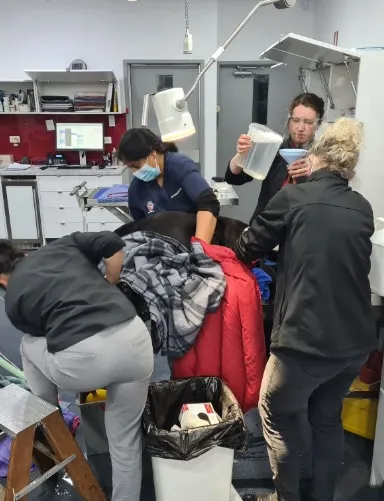
Handling Daisy’s emergency took our whole team working closely together; everyone focused on making sure she got the best care, right here in our clinic.
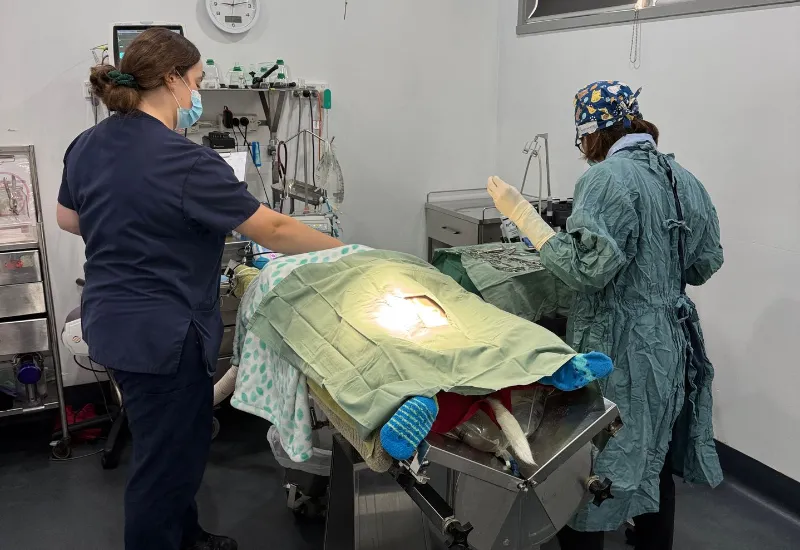
Dr Yuen Jia Lim led the way, with senior nurses Maddison Baker and Dayle Willis helping keep Daisy safe and comfortable during her scans. Nurse Baylee Brown-Malsen stayed by Daisy’s side through the entire surgery, watching her closely and making sure she stayed stable.
From diagnostics through to surgery, each step was carefully managed to maintain Daisy’s stability and comfort.
Treatment Plan And Surgery
That night, we started Daisy on antibiotics and anti-inflammatory medications. We also talked with Rebecca about exactly what to watch for at home and when to call us if things changed.
We booked Daisy’s surgery for the very next day, so she didn’t have to wait any longer than necessary.
When Daisy came in for her surgery, we started her on IV fluids right away. This helped stabilise her and flush out the harmful toxins from the infection.
She then underwent an emergency ovariohysterectomy to remove the infected uterus. A large, pus-filled uterus was successfully removed during surgery.
Recovery And Aftercare
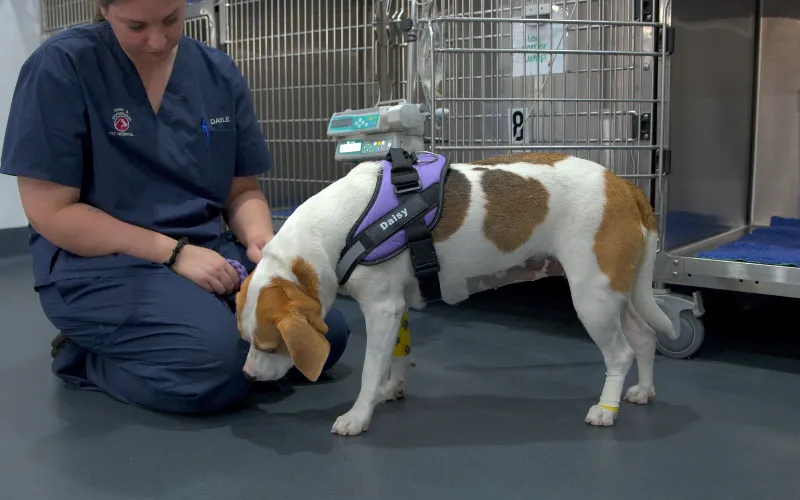
After surgery, Daisy bounced back better than we could have hoped.
She was discharged with pain relief and antibiotics. Her owner was given instructions to monitor appetite, vomiting, and bowel movements. Daisy was put on strict rest for 4 to 5 days.
Intradermal sutures were used, so no external stitches required removal. A fentanyl patch was placed for pain control and removed at her recheck appointment.
A week later, at her check-up, Daisy’s incision looked great; no swelling, no redness, no discharge.
Outcome
Within just a few days, Daisy was back on her feet and acting like herself again.
Her energy and appetite picked up, and her tummy troubles disappeared. It was clear she was feeling much better soon after surgery.
Rebecca was relieved and happy to have her playful Beagle back so soon.
Preventive Insight
Pyometra is a serious illness, but the good news is it’s preventable. Spaying your dog removes the risk altogether and gives you peace of mind.
For entire female dogs, early recognition of subtle signs such as lethargy, appetite changes, or gastrointestinal upset can make a critical difference in outcomes.
Our Services
Trusted Veterinary Services All Under One Roof
Your pet’s care is supported by a highly experienced team who provide everything from routine check ups and preventative care, to advanced diagnostics, surgery and dentistry. We take a careful, thorough approach to every case and keep you informed at each step, so your pet receives reliable, compassionate care throughout their life.
Whether your pet needs everyday health support, or help with a more complex condition, our team work together to provide clear answers and thoughtful treatment in a calm, modern hospital.


PET EDUCATION AND RESOURCES
Practical advice and real case stories to support your pet’s care.
Pet Care Articles
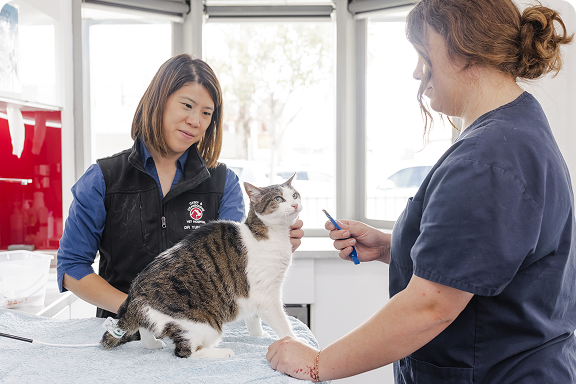
Helpful tips and expert guidance to support your pet’s health and everyday well-being.
Real Life Case Studies
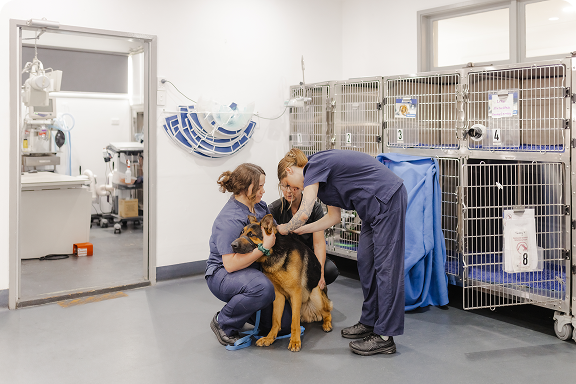
Real stories from our veterinary team showing how we diagnose, treat and support pets through illness and recovery.



Quick Answers to Common Questions
What are the early signs of pyometra that dog owners should watch for?
Early signs of pyometra can include lethargy, reduced appetite, vomiting, diarrhoea, or increased thirst. Some dogs may also show abdominal discomfort or swelling. In Daisy’s case, her symptoms were initially non-specific, which is why prompt veterinary assessment was important.
How is pyometra diagnosed in dogs?
Pyometra is typically diagnosed using a combination of physical examination, blood tests, and imaging such as X-rays or ultrasound. In this case, imaging confirmed fluid within the uterus, while bloodwork supported the presence of a severe infection. These findings together allowed for a clear and timely diagnosis.
Why is pyometra considered an emergency condition?
Pyometra can progress quickly and lead to systemic infection, organ damage, or rupture of the uterus if left untreated. Daisy required urgent surgery because the infection had already significantly impacted her system. Early intervention reduces the risk of life-threatening complications.
What does surgery for pyometra involve in dogs?
Surgery involves an ovariohysterectomy, where the infected uterus and ovaries are removed. In Daisy’s case, a large, pus-filled uterus was removed to eliminate the source of infection. The procedure is more complex than routine desexing due to the risk of rupture and the patient’s compromised condition.
How long does recovery take after pyometra surgery?
Recovery can vary depending on how unwell the dog was before surgery. Daisy showed noticeable improvement within days, with normal appetite and behaviour returning quickly. Most dogs require rest, monitoring, and medication for at least one to two weeks after surgery.
Can pyometra be prevented in female dogs?
Yes, pyometra can be completely prevented through desexing. Removing the uterus and ovaries eliminates the risk of this condition developing. This case highlights how desexing is not only a population control measure but also an important health safeguard.
Book your pet’s appointment
today with our experienced, caring team.

Newsletter sign up
Contact Info
Opening Hours
Monday to Friday: 8:00am –
7:00pm
Saturday: 8:00am – 3:00pm
Sunday: CLOSED
Closed on public holidays
For all out-of-hours emergencies,
please contact Veterinary Referral Hospital (VRH) on 1300 385 874
or Casey Pet Emergency on (03) 8790 1625.