
When Slowing Down Isn’t Just Age: Dug’s Story
Dug is a 14-year-old Border Collie who has always lived life at full speed. He loves beach runs, swimming, and chasing the ball. That was his everyday routine.
So when he started to slow down, it was obvious to everyone around him.
His owner, Luke, first noticed small changes. Dug struggled to get up after lying down, and his back legs looked weaker. He started to lose his playful spark. The zoomies stopped. Even jumping into the car became something he didn’t want to do anymore.
It would have been easy to say Dug was just getting older, but this didn’t feel like normal aging. Something felt different.
A History That Couldn’t Be Ignored
Dug already had a history of joint disease.
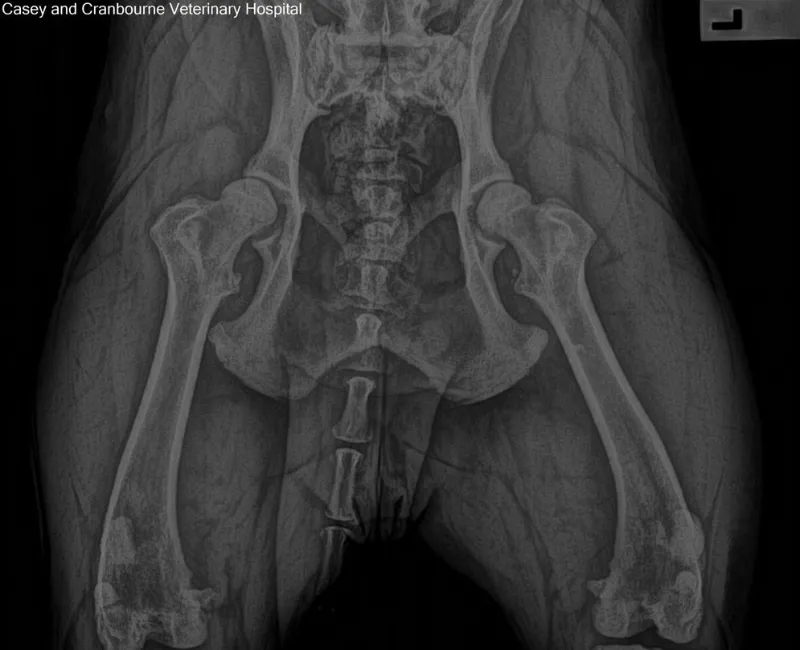
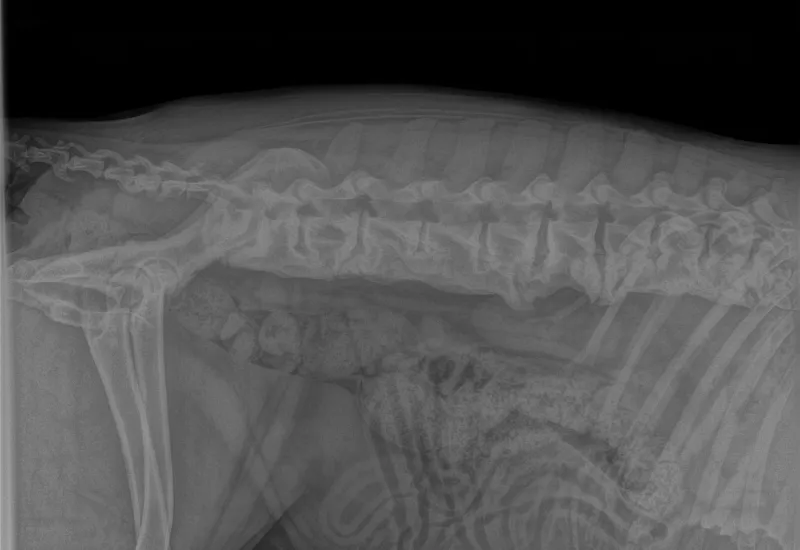
He had arthritis in both hips and spondylosis in his spine. For years, different medications helped keep him comfortable.
But even with this care, things got harder for Dug. That told us his current plan wasn’t enough anymore.
Looking Deeper
During his exam, Dug was clearly uncomfortable. He had pain in his lower back, and his hips didn’t move as well as before. He had also lost muscle in his hindquarters, which often happens when dogs don’t move comfortably.
Luke had already made thoughtful changes at home. He put mats on the floorboards so Dug wouldn’t slip. That kind of care makes a real difference and gives us important insight into Dug’s daily life.
To fully understand what was going on, we did bloodwork and X-rays.
The results confirmed what we suspected. Dug had serious arthritis in both hips and spondylosis in several parts of his spine. These are long-term conditions. While they don’t just disappear, we can manage them with the right care.
“What seemed like ageing was actually ongoing pain that could be managed more effectively.”
Dr Elizabeth DoranRethinking The Plan
Instead of sticking with just one treatment, we rebuilt Dug’s care plan to cover every angle.
This approach aims to manage pain and help Dug move better in multiple ways. It lets us do more, especially for tough, long-term cases like Dug’s.
His new plan included arthritis injections, pain relief tailored just for Dug, and CBD oil to help with comfort and relaxation. We added physiotherapy and rehab to build strength and help him move better.
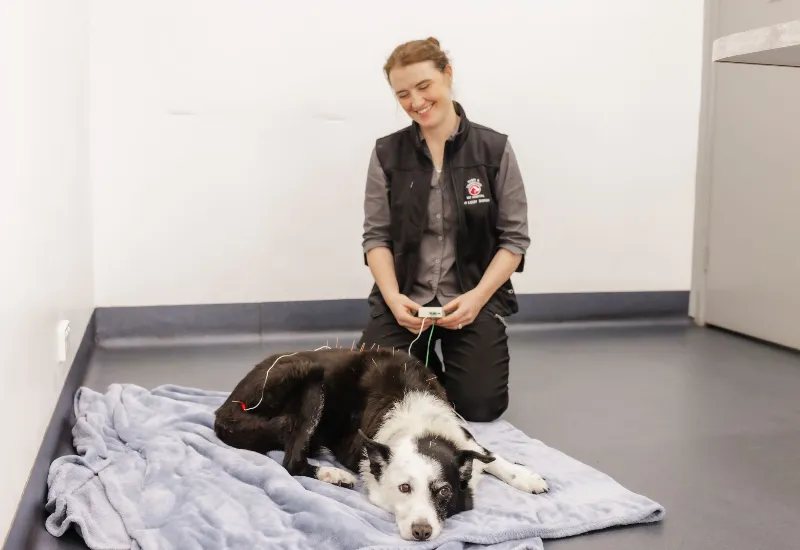
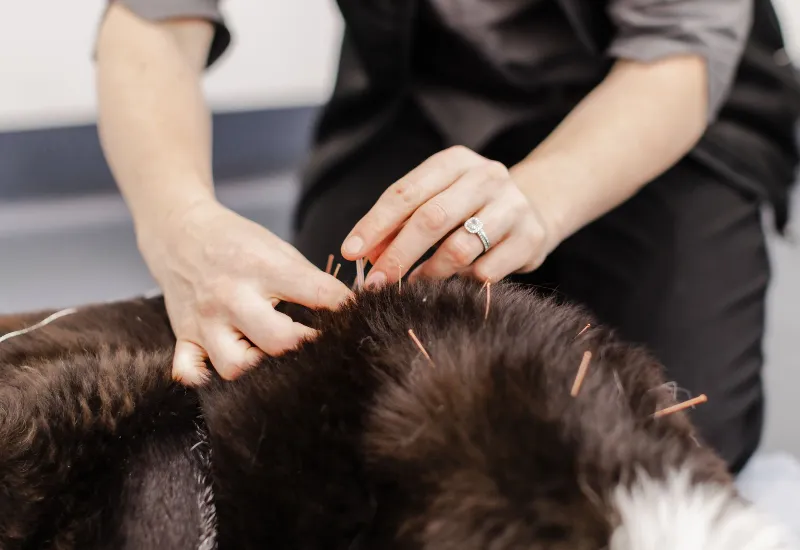
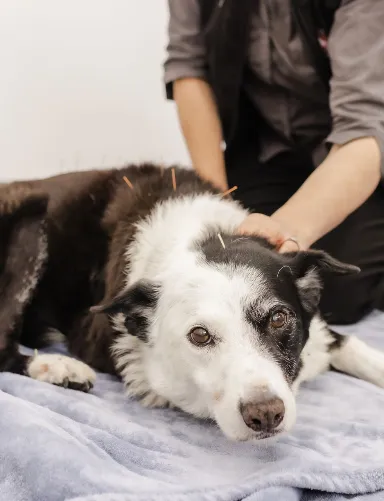
Acupuncture became an important part of his plan too. We used dry needling and laser therapy to help with pain and muscle movement.
This wasn’t about a quick fix. We wanted a plan that would support Dug for the long haul.
Care At Home Matters Just As Much
A big part of Dug’s progress came from what happened at home.
We showed Luke how to perform gentle stretches and soft-tissue work to help Dug’s spine and hips. These small, steady steps help Dug stay mobile between visits.
We encouraged swimming as a gentle exercise. We added joint supplements. And we kept Dug’s home safe and comfortable.
We started acupuncture sessions every 7 to 10 days, then moved to a routine visit every four weeks.
This kind of steady, ongoing care lets us see real change in our patients.
The Change In Dug
Not every improvement is dramatic. But with Dug, the changes were clear.He started getting up more easily. He moved better. He settled well at night, and his mood improved.
Over time, Dug’s muscles got stronger, and he became less stiff during exams. He walked more comfortably and steadily.
Best of all, at home, Dug seemed like himself again.
More Than Just Treatment
One of the best parts of Dug’s care has been his connection with Dr Lizzy.
During acupuncture, Dug gets so relaxed that he often falls asleep. For an older dog needing ongoing care, that comfort truly matters.
Each visit feels calm and reassuring, never stressful or cold.
Ongoing Care, Not A One-Off Fix
Dug continues to attend his acupuncture sessions regularly.
We’ve learned that seeing Dug every four weeks works well for him. If we stretch the time between visits, his stiffness comes back. That kind of feedback helps us guide his care as we go.
This isn’t a ‘set and forget’ plan. We adjust things based on how Dug feels and responds.
“Dug has been on lots of different medications to control the pain of his arthritis, but he was still struggling to get up and down. Dr Leanne suggested we see Dr Lizzy for acupuncture to help improve his mobility. We have noticed improvement in his general movement and demeanour after each session. Dr Lizzy has a special bond with Dug and gets him so relaxed he actually falls asleep during the treatment.”
Luke, Dug’s owner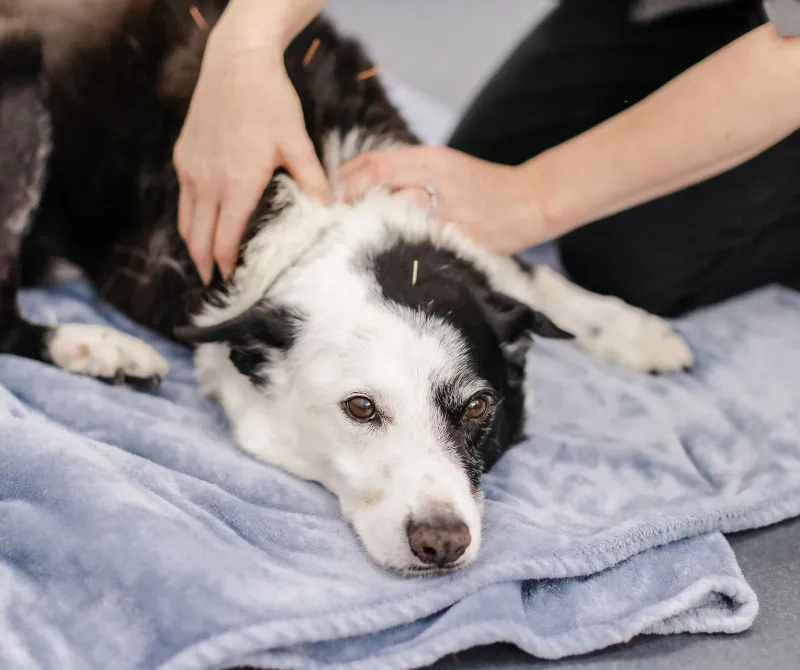
What Dug’s Story Shows
Arthritis is incredibly common. Around 80% of dogs over 8 years old will show signs of it on X-rays.
But it is often misunderstood.
Many dogs are labelled as “just slowing down” when they are actually dealing with ongoing pain. Dogs are very good at hiding discomfort, which makes these changes easy to miss or dismiss.
Dug’s story reminds us that when a dog slows down, it’s worth looking into why.
With the right care, even dogs with advanced arthritis can feel better, move more, and enjoy life again.
And sometimes, they even get their spark back.
Curious if acupuncture could help your pet? Contact Casey & Cranbourne Veterinary Hospital for more information.
Our Services
Trusted Veterinary Services All Under One Roof
Your pet’s care is supported by a highly experienced team who provide everything from routine check ups and preventative care, to advanced diagnostics, surgery and dentistry. We take a careful, thorough approach to every case and keep you informed at each step, so your pet receives reliable, compassionate care throughout their life.
Whether your pet needs everyday health support, or help with a more complex condition, our team work together to provide clear answers and thoughtful treatment in a calm, modern hospital.


PET EDUCATION AND RESOURCES
Practical advice and real case stories to support your pet’s care.
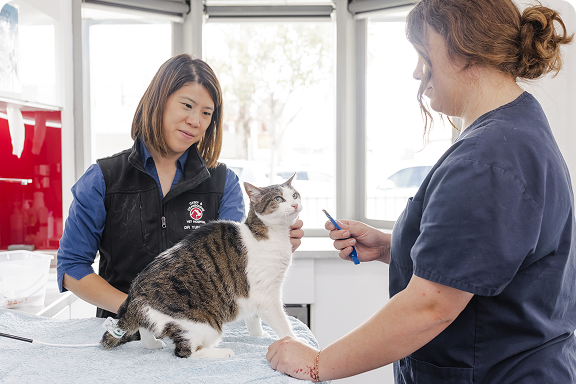
Pet Care Articles
Helpful tips and expert guidance to support your pet’s health and everyday well-being.
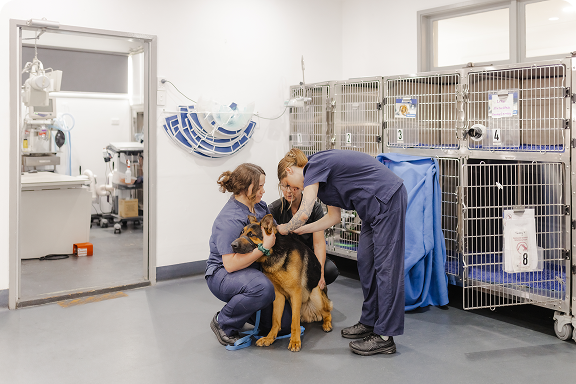
Real Life Case Studies
Real stories from our veterinary team showing how we diagnose, treat and support pets through illness and recovery.

Quick Answers to Common Questions
How can acupuncture help dogs with arthritis?
Acupuncture can be used as part of a broader pain management plan to support mobility and comfort in dogs with arthritis. It is often combined with medication, rehabilitation, and lifestyle adjustments rather than used on its own. Some dogs become very relaxed during treatment, which may help reduce muscle tension and improve overall comfort.
When should a dog with arthritis be reassessed if mobility is worsening?
If a dog is showing increasing difficulty getting up, reluctance to move, or reduced activity, it may indicate that their current management plan is no longer effective. These changes are often mistaken for normal ageing but can reflect underlying pain. A reassessment allows treatment to be adjusted based on current needs.
Why is a multimodal approach important in arthritis management for dogs?
A multimodal approach combines different treatments to address pain, inflammation, and mobility from multiple angles. This may include medications, injections, rehabilitation, and supportive therapies such as acupuncture. Using several strategies together can provide more consistent and balanced management than relying on a single treatment.
What role does at-home care play in managing arthritis in dogs?
At-home care can help maintain mobility and comfort between veterinary visits. This may include gentle stretching, soft-tissue support, appropriate exercise such as swimming, and environmental changes, such as non-slip flooring. Consistency with these measures can support long-term arthritis management.
How do you know if the acupuncture frequency needs to be adjusted over time?
Treatment frequency is usually guided by how the dog responds over time. If stiffness or reduced mobility returns between sessions, it may indicate that treatments need to be scheduled more regularly. Ongoing monitoring allows the plan to be adjusted to suit the dog’s changing needs.
Can acupuncture be combined with other arthritis treatments?
Yes, acupuncture is typically used alongside other treatments such as medication, rehabilitation, or lifestyle changes. A combined approach often provides the best results in managing arthritis and improving your pet’s quality of life.
Book your pet’s appointment
today with our experienced, caring team.

Newsletter sign up
Contact Info
Opening Hours
Monday to Friday: 8:00am –
7:00pm
Saturday: 8:00am – 3:00pm
Sunday: CLOSED
Closed on public holidays
For all out-of-hours emergencies,
please contact Veterinary Referral Hospital (VRH) on 1300 385 874
or Casey Pet Emergency on (03) 8790 1625.